
Refrigerants have played an essential role in refrigeration and air-conditioning systems throughout every generation of technology.
We have gone through the history of refrigerant use from chlorofluorocarbons (CFCs) and hydrochlorofluorocarbons (HCFCs) to hydrofluorocarbons (HFCs), which are now facing reductions in imports and production due to growing environmental concerns.
As a result, hydrofluoroolefin (HFO) refrigerants have emerged as a more environmentally friendly alternative.
In this article, we will explore the key differences between HFO and HFC refrigerants, as well as the benefits of transitioning toward HFO technology.
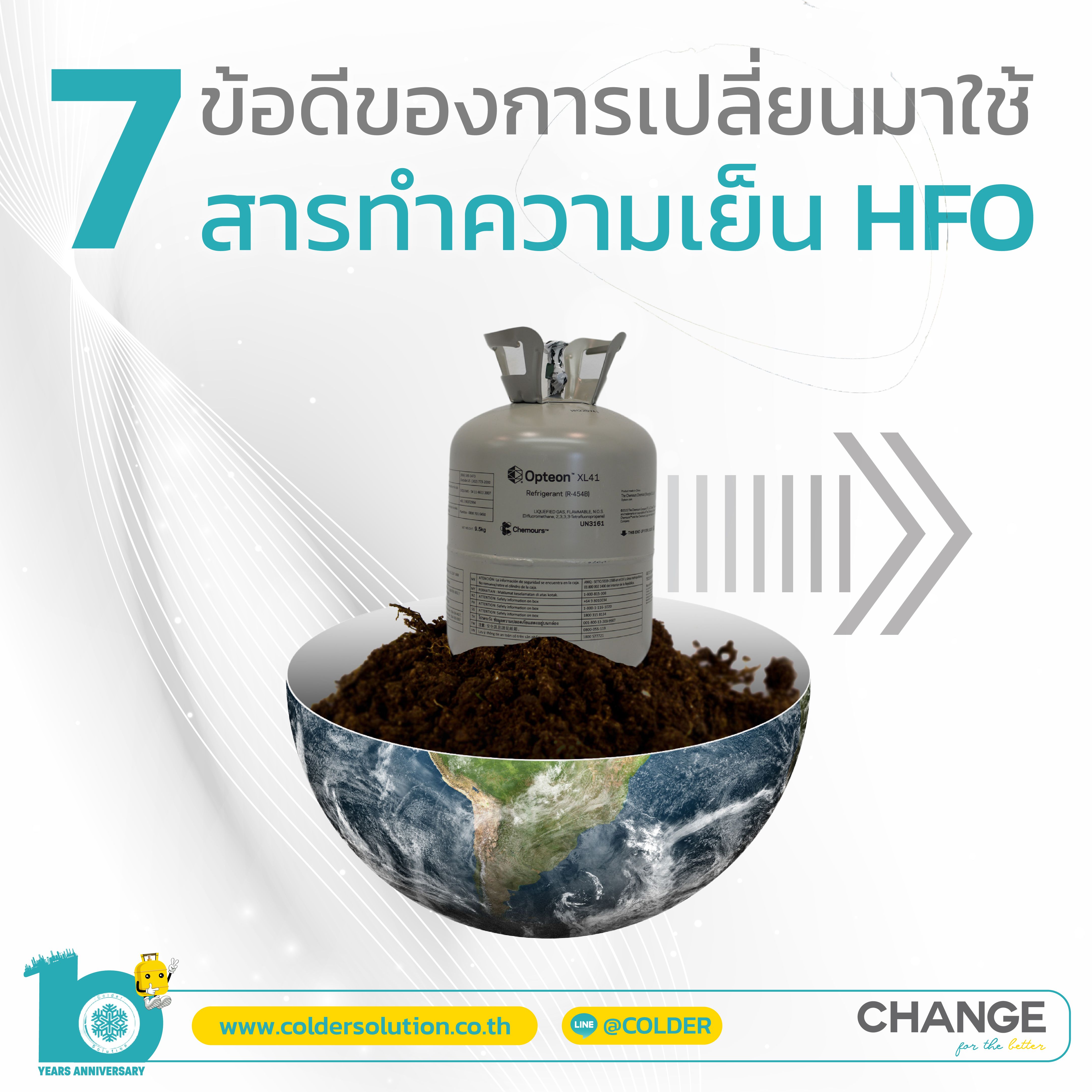
Chemical Differences Between HFO and HFC Refrigerants
HFC Refrigerants
HFC refrigerants consist of hydrogen, fluorine, and carbon atoms.
Compounds such as R-134a and R-410A are known for their chemical stability and favorable thermodynamic properties.
These characteristics have contributed to their widespread use in refrigeration and air-conditioning applications for many years.
HFO Refrigerants
HFO refrigerants are classified as unsaturated hydrofluorocarbons, consisting of hydrogen, fluorine, and carbon atoms with at least one carbon-carbon double bond.
This molecular structure causes HFOs to break down more rapidly in the atmosphere, contributing to their significantly lower Global Warming Potential (GWP) compared with many traditional HFC refrigerants.
Some HFO refrigerants are classified as A2L, meaning they have lower flammability characteristics.
Examples include:
Both refrigerants are gaining increasing attention and adoption worldwide.
Benefits of Transitioning from HFC to HFO Refrigerants
1. Lower Global Warming Potential — GWP
One of the major advantages of HFO refrigerants over many conventional HFC refrigerants is their significantly lower Global Warming Potential (GWP).
GWP is a measure of how much heat a greenhouse gas traps in the atmosphere over a specified period, typically 100 years, compared with carbon dioxide.
Many HFO refrigerants have considerably lower GWP values than traditional HFC refrigerants.
Using lower-GWP refrigerants can therefore help reduce the climate impact associated with refrigerant emissions.
2. Compliance with Environmental Regulations
Climate change and its environmental impacts have become major global concerns.
As a result, governments and international organizations are introducing increasingly strict regulations aimed at reducing or phasing down refrigerants with high GWP values.
Alternative refrigerants such as HFOs are therefore being adopted to help industries comply with these evolving environmental requirements.
Transitioning to lower-GWP refrigerants can also support a company's sustainability strategy and strengthen the environmental positioning of its business and operations.
3. Shorter Atmospheric Lifetime
HFO refrigerants generally have a shorter atmospheric lifetime compared with many HFC refrigerants.
Although this may initially sound counterintuitive, a shorter atmospheric lifetime means that the refrigerant breaks down more quickly after entering the atmosphere.
As a result, its long-term contribution to global warming can be significantly lower.
This is one of the key reasons why many HFO refrigerants have very low GWP values.
4. Hydrophobic Characteristics
Many HFO refrigerants have relatively low affinity for water and may exhibit hydrophobic characteristics.
This characteristic can help reduce interactions with moisture under appropriate system conditions.
However, moisture control remains critically important in every refrigeration and air-conditioning system.
Proper evacuation, system sealing, lubricant management, and refrigerant handling procedures are still essential to reduce the risk of moisture-related problems and corrosion.
5. Compatibility with Existing Refrigeration Systems
In some applications, HFO refrigerants or HFO-based blends can be used as alternatives to existing HFC refrigerants with relatively limited system modifications.
This can make the transition toward lower-GWP refrigerants easier for industries and equipment owners seeking to comply with changing environmental regulations.
However, refrigerants should not automatically be considered direct drop-in replacements.
Before changing refrigerants, users should always verify:
- Compressor compatibility
- Lubricant requirements
- Expansion device requirements
- Material compatibility
- Operating pressure
- Refrigerant safety classification
- Refrigerant charge requirements
- Manufacturer recommendations
- Retrofit guidelines
The suitability of an HFO refrigerant depends on the specific refrigerant and system design.
6. Continuous Research and Development
HFO refrigerants have been introduced relatively recently compared with traditional CFC, HCFC, and HFC technologies.
However, they have attracted significant attention across the global HVAC&R industry.
Chemical manufacturers, refrigeration equipment manufacturers, compressor companies, and HVAC technology providers continue to invest in research and development to improve HFO refrigerant technology.
The objective is to make HFO refrigerants and HFO-based blends increasingly:
- Sustainable
- Energy efficient
- Safe
- Compatible with modern equipment
- Suitable for a broader range of applications
This ongoing development is helping HFO technology become an increasingly important alternative to conventional refrigerants.
7. Energy Efficiency and Performance
HFC refrigerants have historically been widely used because of their excellent heat-transfer and thermodynamic characteristics.
However, many HFO refrigerants and HFO-based blends can provide comparable performance and energy efficiency while significantly reducing environmental impact.
Actual system performance depends on multiple factors, including:
- Refrigerant type
- Compressor design
- Heat exchanger design
- Operating temperatures
- System controls
- Refrigerant charge
- Expansion device
- Application requirements
HFO refrigerants therefore offer the potential to achieve both environmental and energy-performance objectives when properly matched with the system.
Thermodynamic Characteristics and Lubricant Compatibility
HFO refrigerants and related blends may offer favorable thermodynamic and transport properties depending on the specific fluid and application.
These may include characteristics such as:
- Suitable viscosity
- Favorable heat-transfer properties
- Appropriate pressure-temperature relationships
- Compatibility with selected synthetic lubricants such as POE
These properties can contribute to effective heat transfer and system performance when the refrigerant is properly applied.
Ultimately, the environmental impact of changing from an HFC refrigerant to an HFO refrigerant depends on more than the refrigerant's GWP alone.
Other important factors include:
- System design
- Energy consumption
- Refrigerant leakage rate
- Equipment efficiency
- Refrigerant recovery
- Refrigerant handling
- End-of-life refrigerant management
HFO Refrigerants: A Key Part of the Future of HVAC&R
The transition from HFC refrigerants toward HFO and other lower-GWP alternatives represents an important shift in the refrigeration and air-conditioning industry.
HFO refrigerants provide several potential benefits, including:
- Significantly lower GWP
- Shorter atmospheric lifetime
- Compatibility with modern HVAC&R technologies
- Potential for comparable system performance
- Support for environmental and sustainability objectives
However, refrigerant selection should always consider the complete refrigeration system.
Low GWP alone does not automatically make a refrigerant suitable for every application.
Safety classification, compressor compatibility, lubricant requirements, equipment design, efficiency, refrigerant charge, and applicable regulations should all be evaluated before making a transition.
Change for the Better
From our 9th year into our 10th year, we remain committed to continuous development and change — delivering the best possible solutions for everyone. | Change for the Better
View all refrigerant products: Click
Contact Us
Line ID: @Colder
Email: kantawan.coldersolution@gmail.com