
What Are HCFC Refrigerants?
HCFC, or Hydrochlorofluorocarbon, is a group of refrigerants that was widely used in air-conditioning and refrigeration systems.
HCFC molecules contain:
- Hydrogen
- Chlorine
- Fluorine
- Carbon
One of the best-known HCFC refrigerants is R-22, which was widely used in refrigeration and air-conditioning systems for several decades.
HCFCs were originally introduced as transitional alternatives to CFC refrigerants. Although they have a lower ozone-depletion impact than CFCs, HCFCs still contain chlorine and therefore continue to contribute to stratospheric ozone depletion.
This led to the development and adoption of alternatives such as HFC refrigerants, including R-134a and R-410A, which have ODP = 0, followed by newer lower-GWP refrigerants such as HFOs and other next-generation alternatives.
Why Are HCFC Refrigerants Being Phased Out?
The global phaseout of HCFCs is being implemented under the Montreal Protocol.
In the United States, production and import of virgin HCFC-22, or R-22, for servicing refrigeration and air-conditioning equipment ended on 1 January 2020.
Existing systems can still operate and may be serviced using recovered, reclaimed or previously produced R-22.
For developing countries covered under Article 5 of the Montreal Protocol, the HCFC phaseout schedule has progressively reduced production and consumption, with a 67.5% reduction from baseline beginning in 2025 and phaseout scheduled for 2030, subject to a limited servicing allowance through 2040.
Thailand is also progressing through this HCFC phaseout as part of its international environmental commitments.
Examples of HCFC Refrigerants
R-22 Refrigerant
GWP: 1,810
Application: Low and Medium Temperature Refrigeration, Air Conditioning
Typical Lubricant: Mineral Oil, selected POE applications depending on equipment
ASHRAE Safety Class: A1
Composition: 100% Chlorodifluoromethane (CHClF₂)
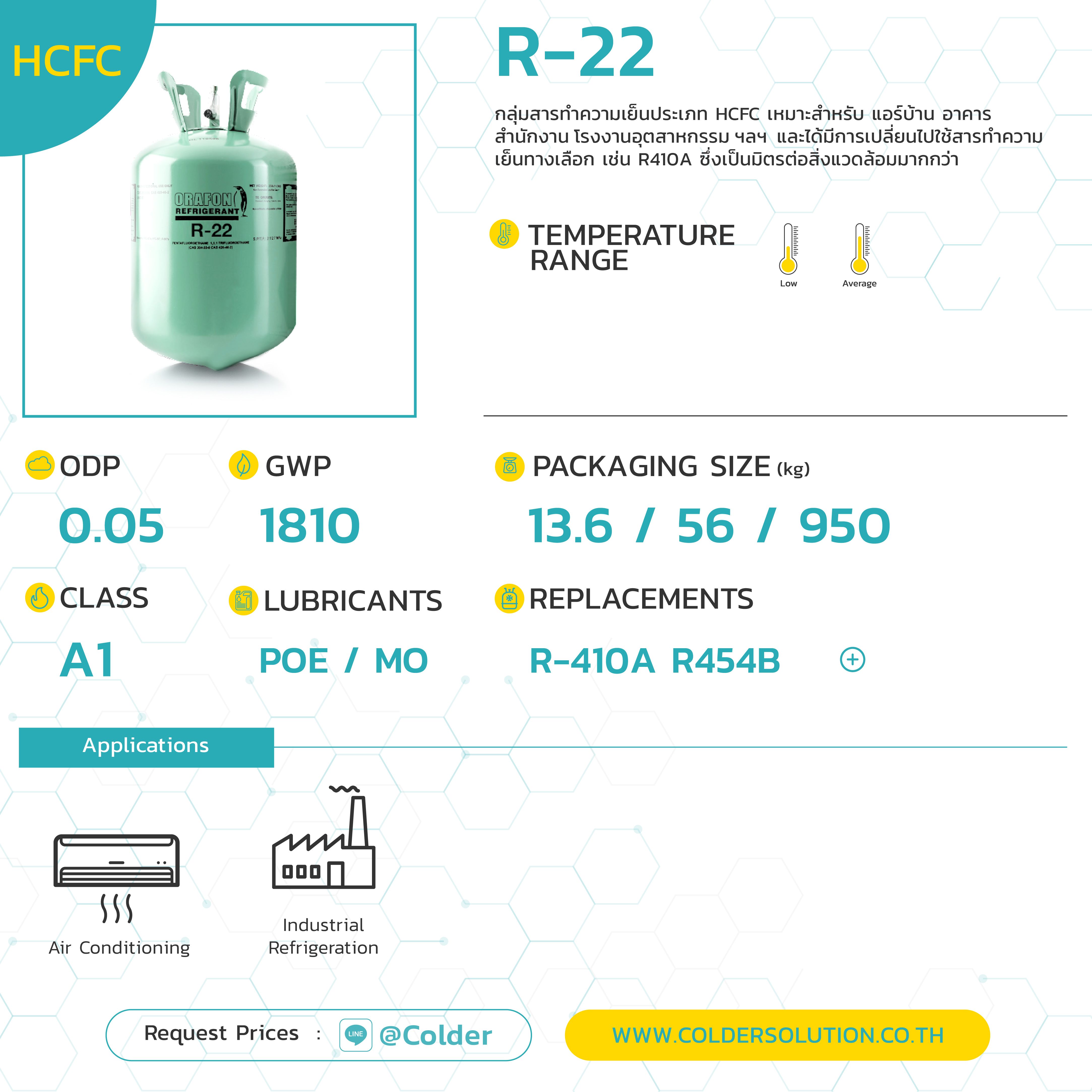
R-22 is an HCFC refrigerant that was widely used in residential, commercial and industrial air-conditioning and refrigeration systems.
Its effective refrigeration performance made it one of the most common refrigerants in the HVAC-R industry for decades.
However, because R-22 has Ozone Depletion Potential, production and import have been phased out or restricted in many countries.
As virgin R-22 supply decreases, existing systems increasingly depend on recovered or reclaimed refrigerant.
Alternatives to R-22
Refrigerants such as R-410A, R-32 and R-454B are used in newer equipment categories that historically relied on R-22 systems.
However, these refrigerants are not direct drop-in replacements for R-22.
Changing to a different refrigerant may require new equipment or a properly engineered retrofit depending on the application.
R-123 Refrigerant
GWP: 77
Application: Centrifugal Chillers
Typical Lubricant: Mineral Oil
ASHRAE Safety Class: B1
Composition: 2,2-Dichloro-1,1,1-trifluoroethane
Alternative Refrigerants: R-514A and other low-pressure chiller alternatives, depending on equipment design
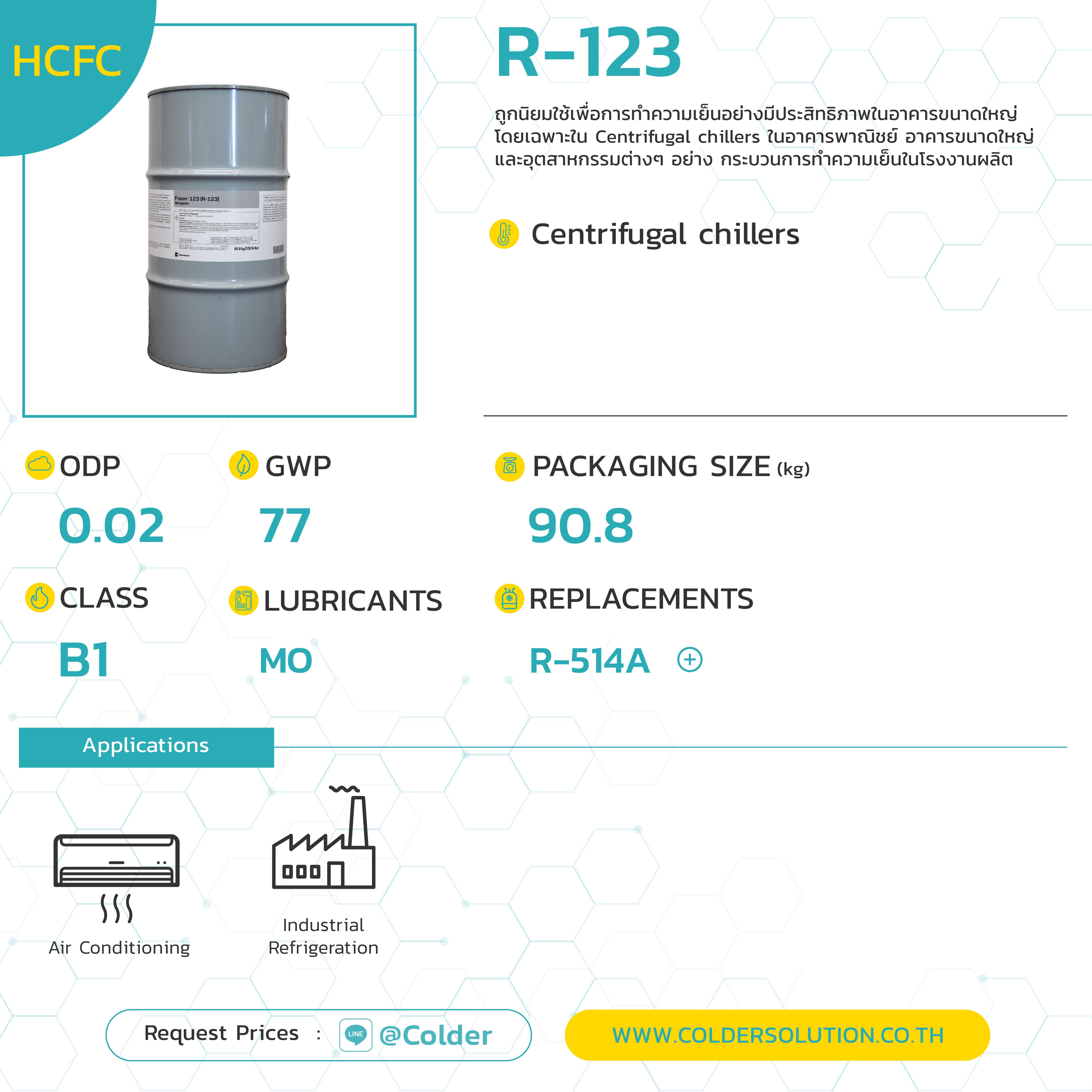
R-123 has been widely used in low-pressure centrifugal chillers, particularly in large commercial buildings and industrial facilities.
Typical applications include:
- Commercial buildings
- Large facilities
- Industrial cooling
- Manufacturing plants
- Data centers
- Power generation facilities
R-123 became an important alternative to older R-11 chillers because it offered lower ozone-depletion impact while providing suitable thermodynamic characteristics for low-pressure centrifugal chiller systems.
However, R-123 is still an HCFC and is therefore included in the global HCFC phaseout.
Newer low-GWP alternatives such as R-514A have been developed for selected low-pressure chiller applications.
R-141b
GWP: 725
Application: Foam Blowing, Cleaning and Selected Industrial Applications
Typical Lubricant: Mineral Oil
Composition: 1,1-Dichloro-1-fluoroethane
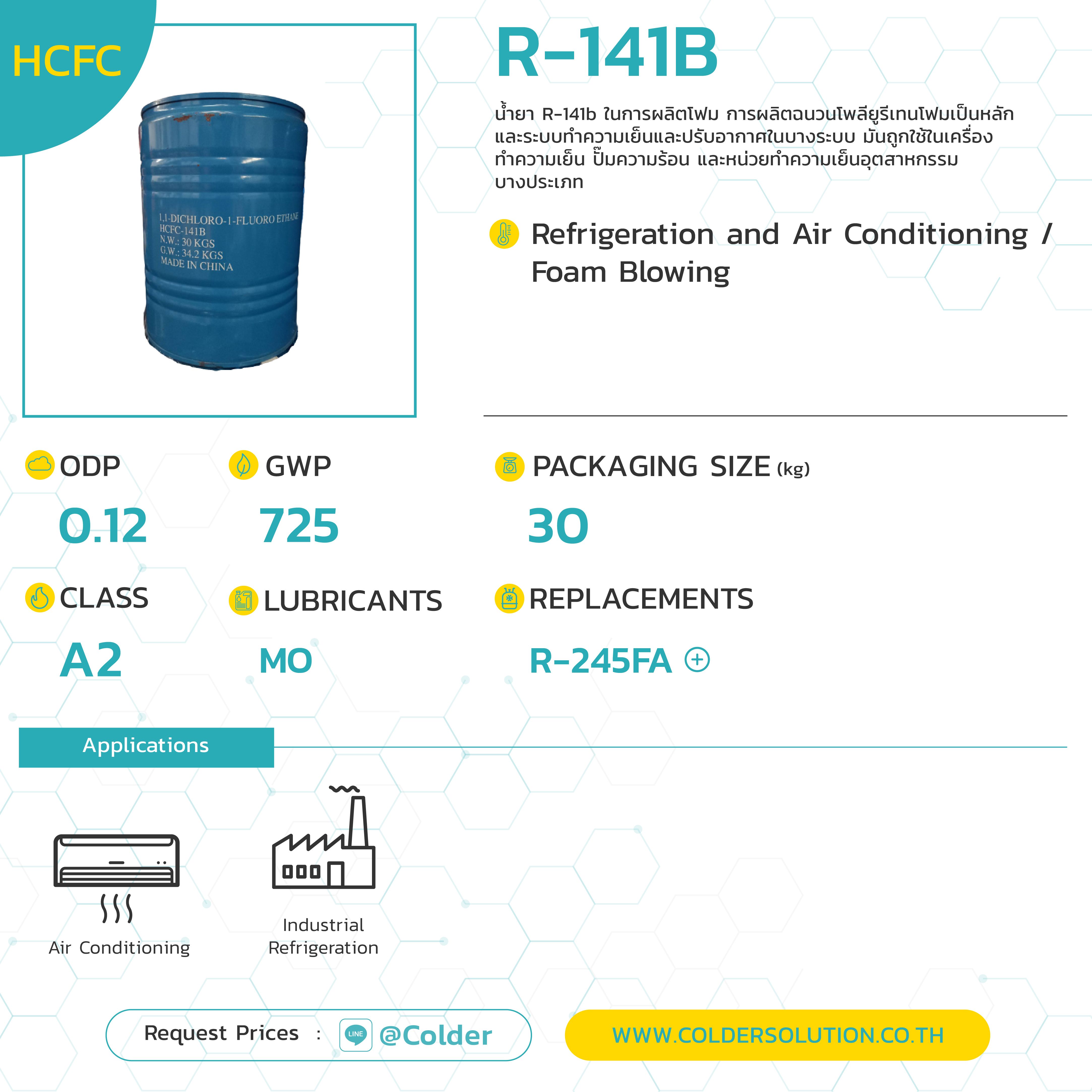
R-141b is an HCFC that has been widely used as an alternative to R-11 in several industrial applications.
One of its major historical uses has been as a foam-blowing agent, particularly in the production of polyurethane insulation foam.
R-141b has also been used in applications such as:
- Cleaning refrigeration systems
- Removing oil and contaminants
- Industrial solvent applications
- Foam production
- Selected refrigeration-related processes
Because R-141b is an ozone-depleting HCFC, its production and consumption are also subject to phaseout controls under the Montreal Protocol.
The Transition Beyond HCFC Refrigerants
The phaseout of HCFC refrigerants is part of a much larger transition in the HVAC-R industry.
The industry has progressively moved through:
CFC → HCFC → HFC → Lower-GWP HFC / HFO / Natural Refrigerants
Each transition aims to reduce environmental impact while maintaining refrigeration performance, safety and energy efficiency.
However, refrigerant selection should never be based on environmental performance alone.
Important factors include:
- GWP
- ODP
- Safety classification
- Operating pressure
- Energy efficiency
- Compressor compatibility
- Lubricant compatibility
- Equipment design
- Refrigerant availability
- Local regulations
View HCFC Refrigerants
View available HCFC refrigerant products here.
Colder Solution
Colder Solution is committed to supplying quality refrigerants from trusted brands, with a focus on quality, safety and a wider range of next-generation lower-GWP solutions.
As refrigerant regulations and technologies continue to change, we aim to help customers select refrigerants that provide the right balance between performance, safety, cost and environmental impact.
Line ID: @Colder
Email: kantawan.coldersolution@gmail.com