
What Is Inside a Refrigerant Cylinder?
A refrigerant, commonly referred to as air-conditioning refrigerant, is a chemical compound used in refrigeration and air-conditioning systems.
It acts as a heat-transfer medium, absorbing and transferring heat from one location to another.
The composition of a refrigerant can vary depending on:
- Refrigerant formulation
- Refrigerant type
- Application
- System requirements
- Performance requirements
- Applicable regulations and standards
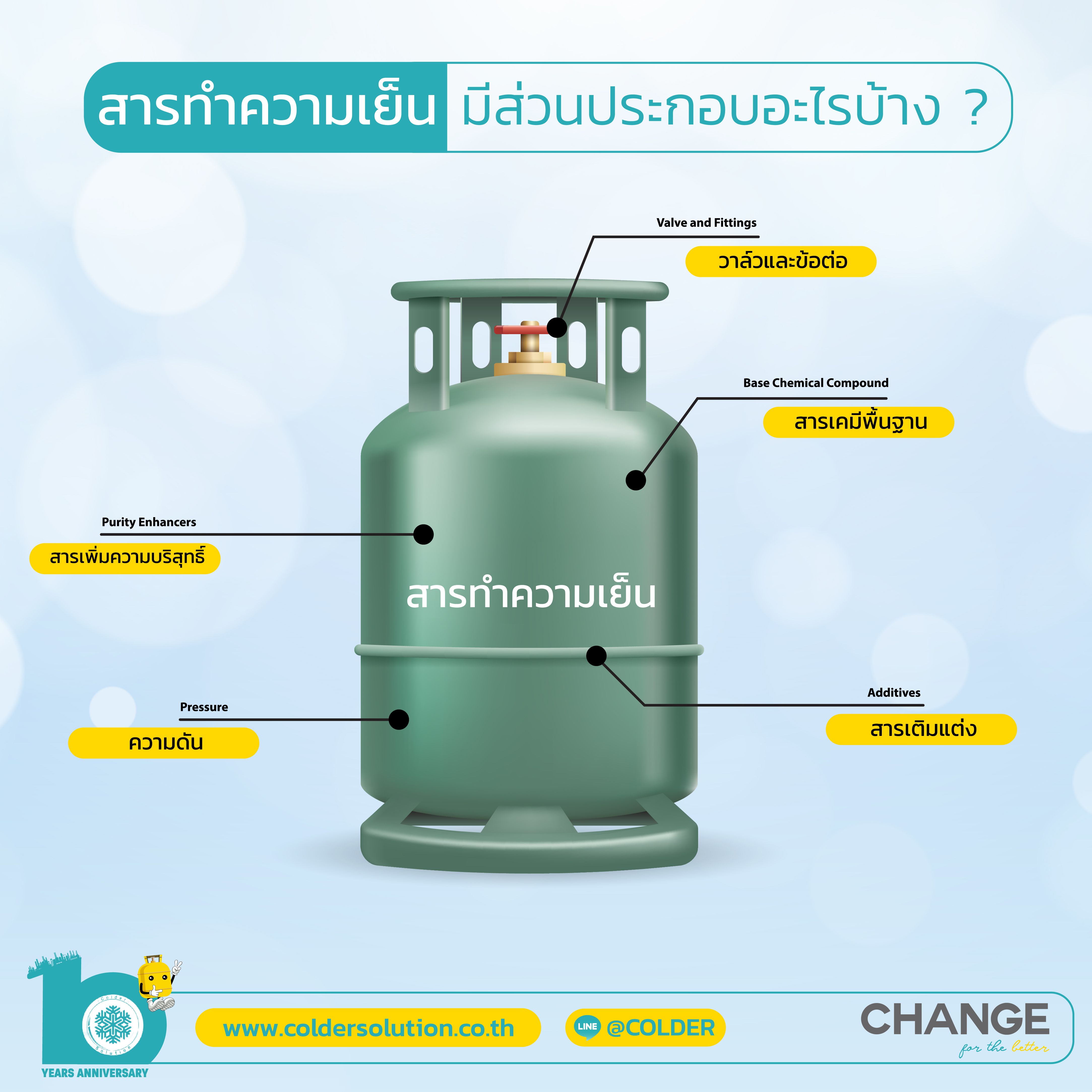
Main Components Found in a Refrigerant Cylinder
1. Refrigerant
The main substance inside a refrigerant cylinder is the refrigerant itself.
It is stored in liquid or vapor form under pressure.
During the refrigeration cycle, the refrigerant undergoes phase changes that allow it to absorb and release heat.
Some refrigerants are single-component fluids, while others are formulated by blending several chemical components together to achieve specific:
- Thermodynamic properties
- Pressure-temperature characteristics
- Cooling performance
- Safety characteristics
- Environmental performance
2. Refrigerant Purity
High-quality refrigerant requires a high level of purity to provide consistent performance and stability.
During production, refrigerants may undergo purification processes to remove contaminants and impurities.
These processes can include:
Distillation
Used to separate different chemical components and remove unwanted impurities.
Filtration
Used to remove solid particles and contaminants.
Chemical Treatment
May be used to neutralize acids, remove moisture or improve refrigerant stability.
Maintaining appropriate purity is important because contamination can affect system performance and potentially damage refrigeration equipment.
3. Additives
Some refrigerant products or related formulations may contain additives or stabilizing agents designed for specific applications.
Depending on the product and application, additives may be used to:
- Improve stability
- Prevent chemical degradation
- Improve lubrication
- Reduce corrosion
- Improve heat-transfer characteristics
- Support specific industrial applications
Examples can include:
- Corrosion inhibitors
- Stabilizers
- Lubricants
- Propellants in aerosol applications
- Leak-detection dyes
- Odorants for selected applications
The actual composition depends on the refrigerant product and its intended use.
4. Pressure
A refrigerant cylinder is a pressurized container designed to store refrigerant safely under specified conditions.
The pressure inside the cylinder depends on several factors, including:
- Refrigerant type
- Temperature
- Vapor pressure
- Quantity of refrigerant
- Physical state of the refrigerant
Depending on temperature and pressure conditions, refrigerant inside the cylinder may exist as:
- Liquid
- Vapor
- A combination of liquid and vapor
Proper cylinder design and handling are therefore important for safe refrigerant storage.
5. Valves and Fittings
Refrigerant cylinders are equipped with valves and fittings to allow refrigerant to be safely charged, transferred and discharged.
The cylinder valve allows technicians to control refrigerant flow from the cylinder into refrigeration or air-conditioning equipment.
Different refrigerants and cylinder types may use different:
- Valve designs
- Connections
- Threads
- Safety devices
These components help ensure proper refrigerant handling during storage, transport and system charging.
Proper Refrigerant Storage and Handling
Overall, a refrigerant cylinder mainly contains the refrigerant chemical itself, together with the required formulation and pressure conditions necessary for safe storage and use.
Proper refrigerant storage and handling are essential.
Users should always handle refrigerant cylinders carefully and follow appropriate safety procedures to prevent:
- Refrigerant leakage
- Chemical exposure
- Cylinder damage
- Contamination
- Improper storage
Correct storage and handling help maintain:
- Refrigerant quality
- System performance
- User safety
- Environmental protection
Why Refrigerant Quality Matters
The quality of the refrigerant inside the cylinder can directly affect the performance and reliability of a refrigeration or air-conditioning system.
Important factors include:
- Correct refrigerant composition
- High purity
- Low contamination
- Proper storage
- Proper cylinder condition
- Safe transportation
- Correct handling procedures
Choosing refrigerant from a reliable source can therefore help ensure consistent system performance and reduce unnecessary risks.
Colder Solution
Colder Solution supplies refrigerants for a wide range of refrigeration and air-conditioning applications.
We focus on refrigerant products that provide an appropriate balance between:
- Quality
- Purity
- Safety
- Performance
- Environmental responsibility
We also provide lower-GWP refrigerant options for different refrigeration systems and temperature ranges.
With years of experience in the refrigeration industry, we are ready to provide product information and refrigerant recommendations for different applications.
Line ID: @Colder
Email: kantawan.coldersolution@gmail.com