
Today, refrigerants such as R-134a and high-pressure refrigerants such as R-410A are still widely used in refrigeration and air-conditioning systems.
However, the future of refrigerants is changing rapidly.
New regulations and environmental commitments are beginning to reshape the air-conditioning and refrigeration industry, with increasing emphasis on:
- Protecting the ozone layer
- Reducing greenhouse gas emissions
- Improving energy efficiency
- Reducing dependence on conventional high-GWP HFC refrigerants
- Introducing equipment designed for lower-GWP alternatives
Today, Colder Solution takes a closer look at several Medium-Pressure refrigerant options, comparing both conventional and next-generation refrigerants.
The Challenge of Choosing a Next-Generation Refrigerant
Many next-generation refrigerants still involve trade-offs between:
- Energy efficiency
- Global Warming Potential — GWP
- Toxicity
- Flammability
- System compatibility
- Cost
These factors can make facility owners and refrigeration-system operators hesitant when considering a refrigerant transition.
There is rarely a single refrigerant that provides the lowest GWP, highest efficiency, lowest cost, and lowest safety risk at the same time.
The right choice therefore depends on the balance required by each application.
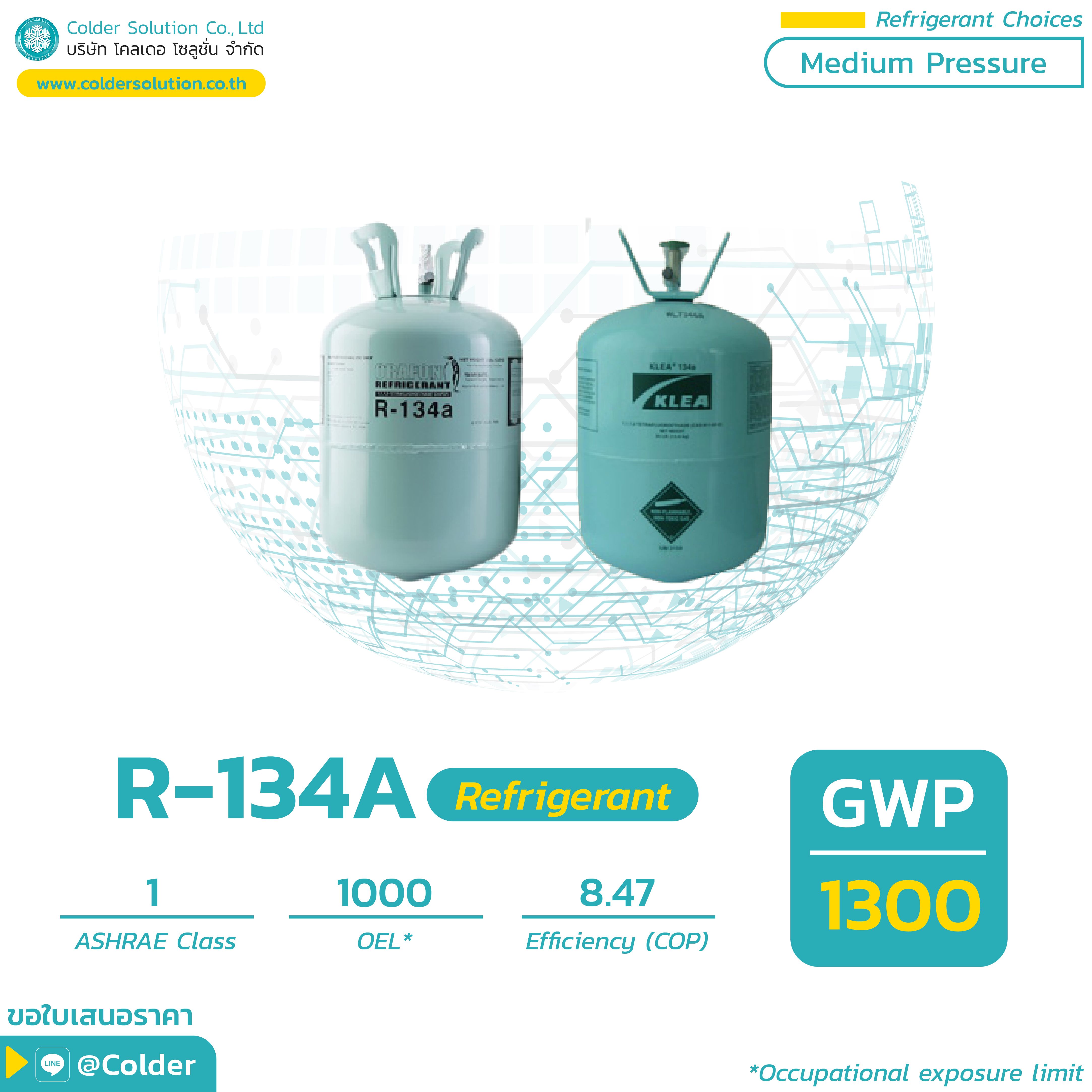
R-134a: A Long-Established Medium-Pressure Refrigerant
R-134a has been widely used for many years in refrigeration and air-conditioning applications.
It offers:
- Well-established system design
- Broad commercial availability
- Good thermodynamic performance
- A1 safety classification
- Extensive compressor and equipment compatibility
However, its relatively high GWP has become an important consideration as environmental regulations continue to move toward lower-GWP alternatives.
This has created growing interest in refrigerants such as R-1234yf, R-1234ze and R-513A.
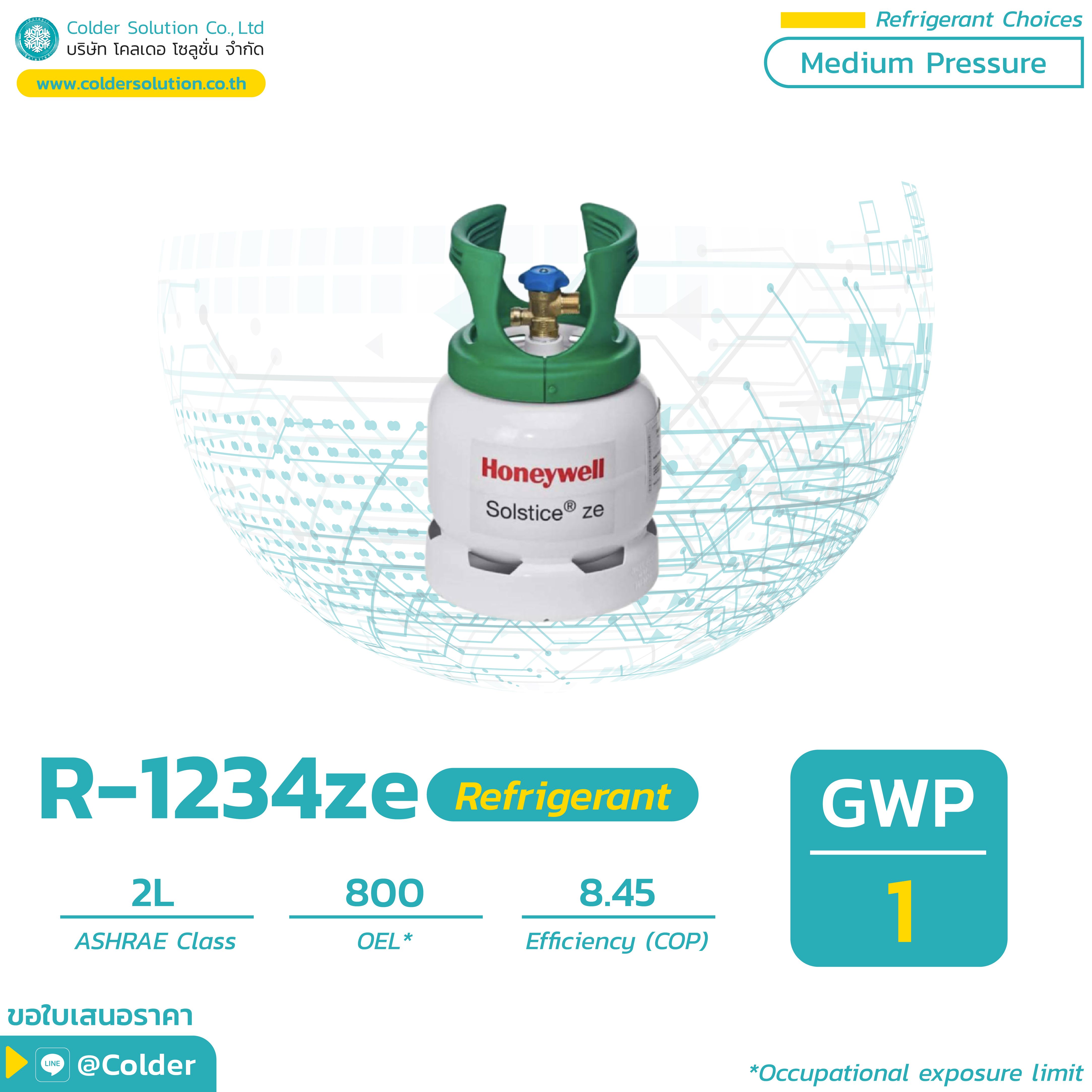
R-1234ze: An Ultra-Low-GWP Alternative to R-134a
When comparing alternatives, Honeywell R-1234ze can be an attractive option for applications requiring a refrigerant with ultra-low GWP.
R-1234ze offers a GWP below 10 and thermodynamic characteristics that make it suitable for a range of refrigeration and air-conditioning applications.
However, achieving the same refrigeration capacity as an R-134a system may require changes in equipment design, including compressor selection and system sizing.
R-1234ze is also classified as A2L, meaning it has lower flammability characteristics.
Read more about A2L refrigerants.
Key Considerations for R-1234ze
- Ultra-low GWP
- ODP = 0
- A2L safety classification
- Suitable for specifically designed systems
- May require equipment redesign or resizing
- Appropriate for applications prioritizing very low environmental impact
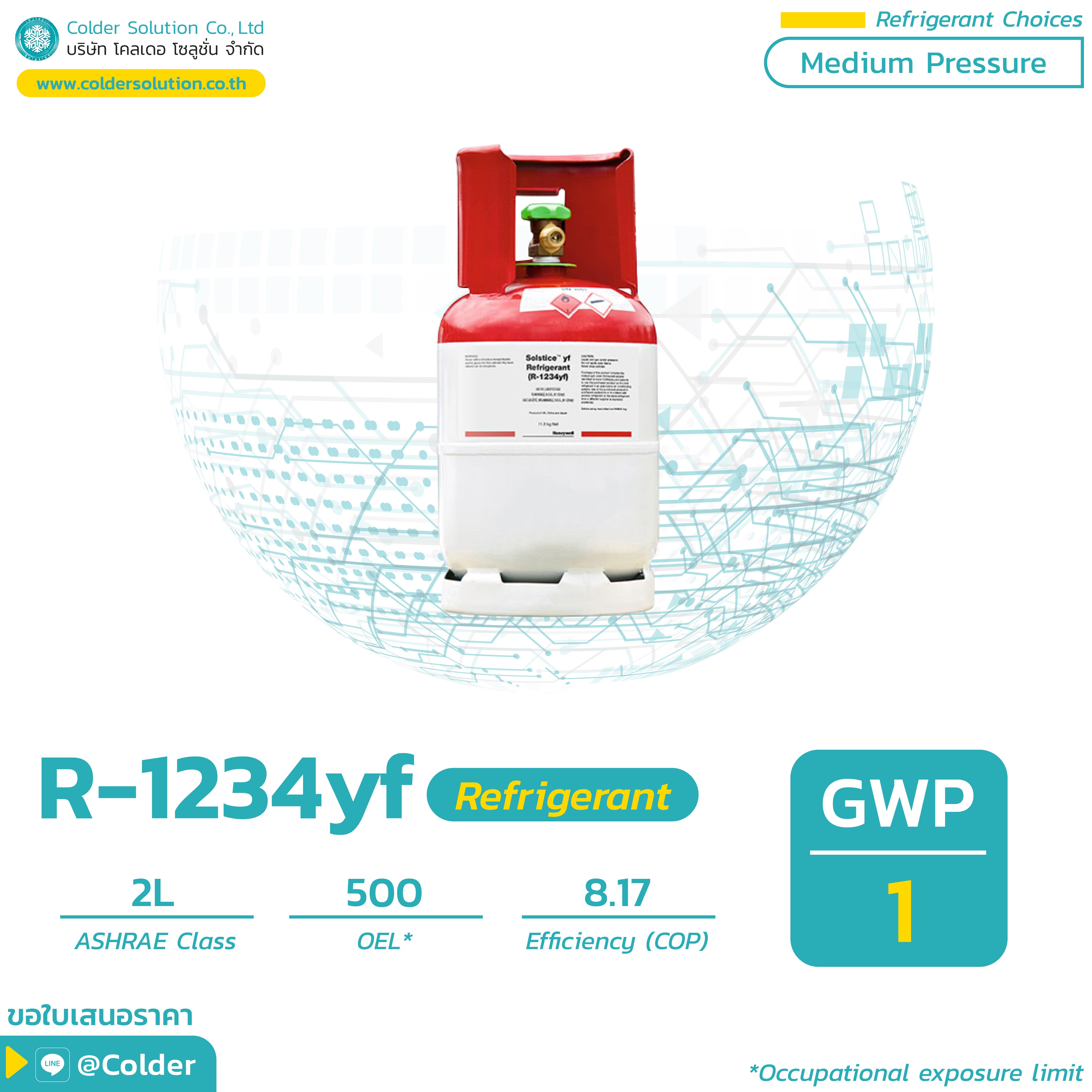
R-1234yf: Very Low GWP with Growing Global Adoption
R-1234yf is another HFO refrigerant developed as a lower-GWP alternative to R-134a.
It has become particularly well known for its use in automotive air-conditioning systems.
Key characteristics include:
- Very low GWP
- ODP = 0
- A2L safety classification
- Pressure-temperature characteristics relatively close to R-134a
- Growing commercial availability
However, as with R-1234ze, its A2L classification means that system design and safety requirements must be carefully considered.
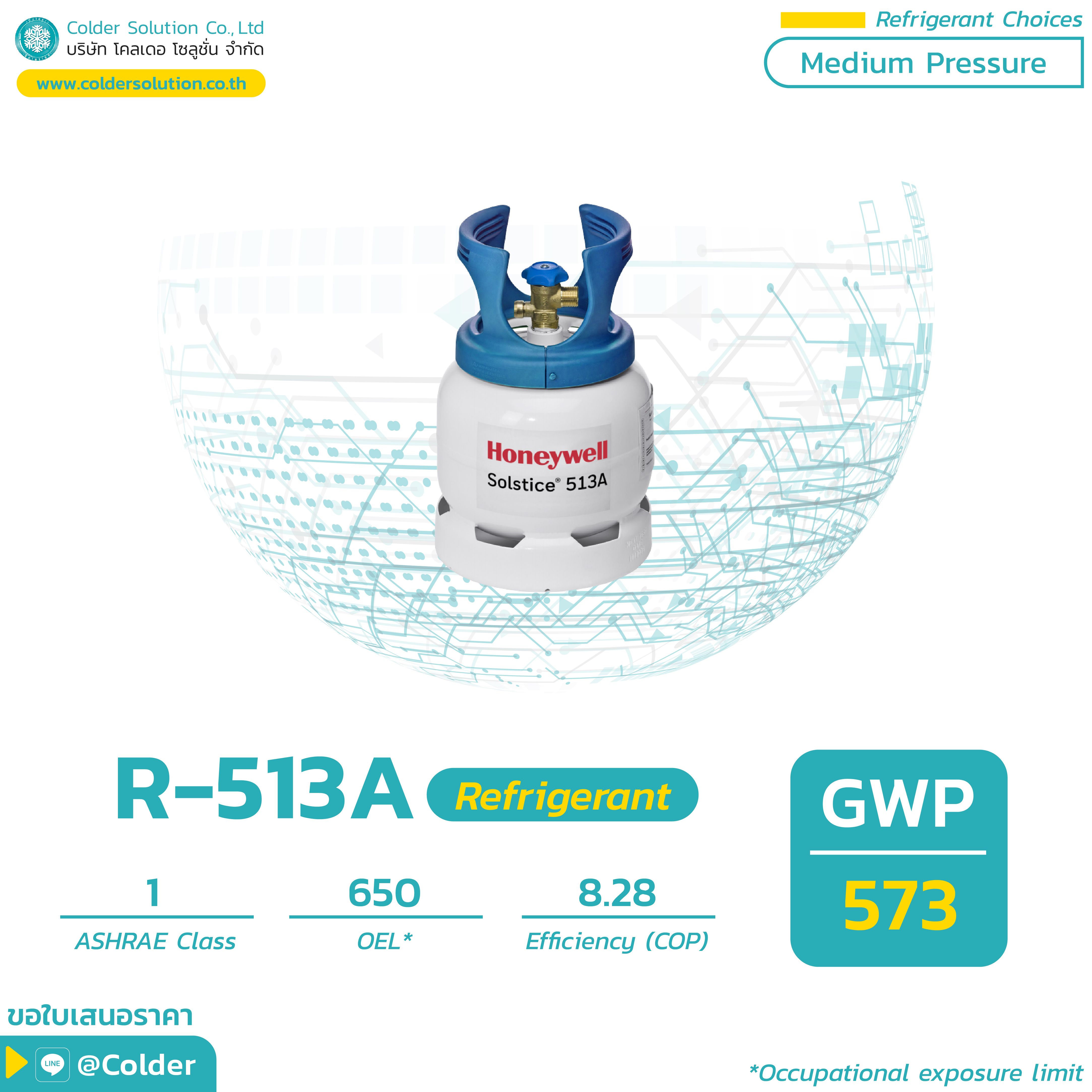
R-513A: A Lower-GWP A1 Alternative
For users looking for a lower-GWP solution while maintaining an A1 safety classification, R-513A can be an important option.
R-513A is a blend of:
- R-1234yf
- R-134a
Both components have been commercially available for many years.
The blend provides a lower GWP than conventional R-134a while maintaining an A1 safety classification, meaning it does not propagate flame under the specified safety-classification test conditions.
Why R-513A Can Be Attractive
R-513A offers a balance between:
- Lower GWP
- A1 safety classification
- Similar operating characteristics to R-134a
- Established commercial availability
- Potential suitability for both new systems and selected retrofit applications
For businesses that require a lower-GWP refrigerant but want to avoid moving to an A2L refrigerant, R-513A can therefore be an attractive long-term option depending on the application and equipment approval.
What Should Be Considered When Selecting a Replacement Refrigerant?
Selecting a refrigerant should not be based on GWP alone.
A complete evaluation should consider several factors.
Safety
Important considerations include:
- Toxicity
- Flammability
- Pressure
- Physical hazards
- Refrigerant charge
- Ventilation requirements
- Leak detection requirements
Environmental Impact
The refrigerant's Global Warming Potential (GWP) remains one of the most important environmental indicators.
However, environmental performance should also consider:
- Energy efficiency
- Refrigerant leakage
- Total refrigerant charge
- Equipment lifetime
- Recovery and end-of-life management
Energy Efficiency
A refrigerant with a lower GWP does not automatically produce a more energy-efficient system.
System efficiency depends on:
- Compressor design
- Heat exchanger design
- Operating temperatures
- Refrigerant charge
- Expansion device
- Control strategy
- Overall system optimization
System Compatibility
Before replacing a refrigerant, always check:
- Compressor approval
- Lubricant compatibility
- Expansion valve requirements
- Material compatibility
- Pressure limits
- Refrigerant charge
- Safety classification
- Manufacturer recommendations
Some refrigerants may require only limited modifications, while others may require a new system design.
Cost and Long-Term Availability
The initial refrigerant price is only one part of the total cost.
Long-term considerations include:
- Refrigerant availability
- Equipment modification cost
- Energy consumption
- Maintenance cost
- Regulatory compliance
- Future supply restrictions
A refrigerant that costs more initially may still provide better long-term value if it reduces regulatory or operational risks.
Comparing Medium-Pressure Refrigerant Options
| Refrigerant | Refrigerant Type | Safety Class | General Positioning |
|---|---|---|---|
| R-134a | HFC | A1 | Established medium-pressure refrigerant with broad compatibility |
| R-1234yf | HFO | A2L | Ultra-low-GWP option with growing global adoption |
| R-1234ze | HFO | A2L | Ultra-low-GWP option for specifically designed systems |
| R-513A | HFO/HFC Blend | A1 | Lower-GWP alternative offering A1 safety classification |
The best refrigerant depends on the specific application.
There is no single refrigerant that is automatically the best choice for every refrigeration system.
Which Medium-Pressure Refrigerant Is Right for Your System?
For applications that prioritize ultra-low GWP, refrigerants such as R-1234ze or R-1234yf may offer significant environmental advantages.
For applications where maintaining A1 safety classification is particularly important, R-513A may offer a useful balance between environmental performance, system compatibility, and safety.
Meanwhile, R-134a continues to remain in use in many existing systems, although the long-term trend is clearly moving toward lower-GWP alternatives.
The final refrigerant selection should always consider:
Safety + GWP + Efficiency + Cost + Compatibility + Long-Term Availability
rather than relying on a single specification.
More Refrigerant Information
For additional refrigerant specifications, product information, and downloadable technical data, visit:
Colder Solution
At Colder Solution, we aim to provide confidence in the quality and safety standards of every refrigerant brand we supply.
We also provide a wide range of next-generation refrigerant options with lower GWP and high performance, helping businesses prepare for the future of refrigeration and air-conditioning in a more sustainable world.
Colder Solution supplies quality refrigerants from leading brands including:
- Orafon
- Honeywell
- Klea
- DuPont
- Daikin
- and others
We also supply:
- Compressors
- Danfoss refrigeration components
- Refrigeration spare parts
- High-quality lubricants
- Other HVAC-R products
If you need advice on refrigeration systems or help selecting the most suitable refrigerant for your business, contact us for product and application support.
Line Official Account: @Colder
Email: kantawan.coldersolution@gmail.com