
Temperature Ranges and Suitable Refrigerants for Industrial Cold Rooms
Cold storage and freezing are widely used to preserve the quality of industrial raw materials, especially food products such as seafood, meat, vegetables and fruit.
The main objectives are to maintain product quality for as long as possible and to slow down the growth of microorganisms.
Selecting the right storage temperature and cold room type depends not only on the type of product, but also on the production process and how the cold room will be used.
Two Common Types of Cold Room Construction
Cold rooms can generally be divided into two main construction types.
Prefabricated Cold Room
A prefabricated cold room is usually smaller, relatively economical and can be relocated.
Typical applications include:
- Small storage areas
- Retail and food businesses
- Temporary cold storage
- Cold-chain transportation support
Capacity depends on room size and product type.
Custom-Built Cold Room
A custom-built cold room can be designed according to the specific requirements of the facility.
It is suitable for larger businesses and industrial applications and can provide storage capacity ranging from several tons to hundreds of tons.
These cold rooms use industrial refrigeration and freezing principles to reduce and maintain product temperature.
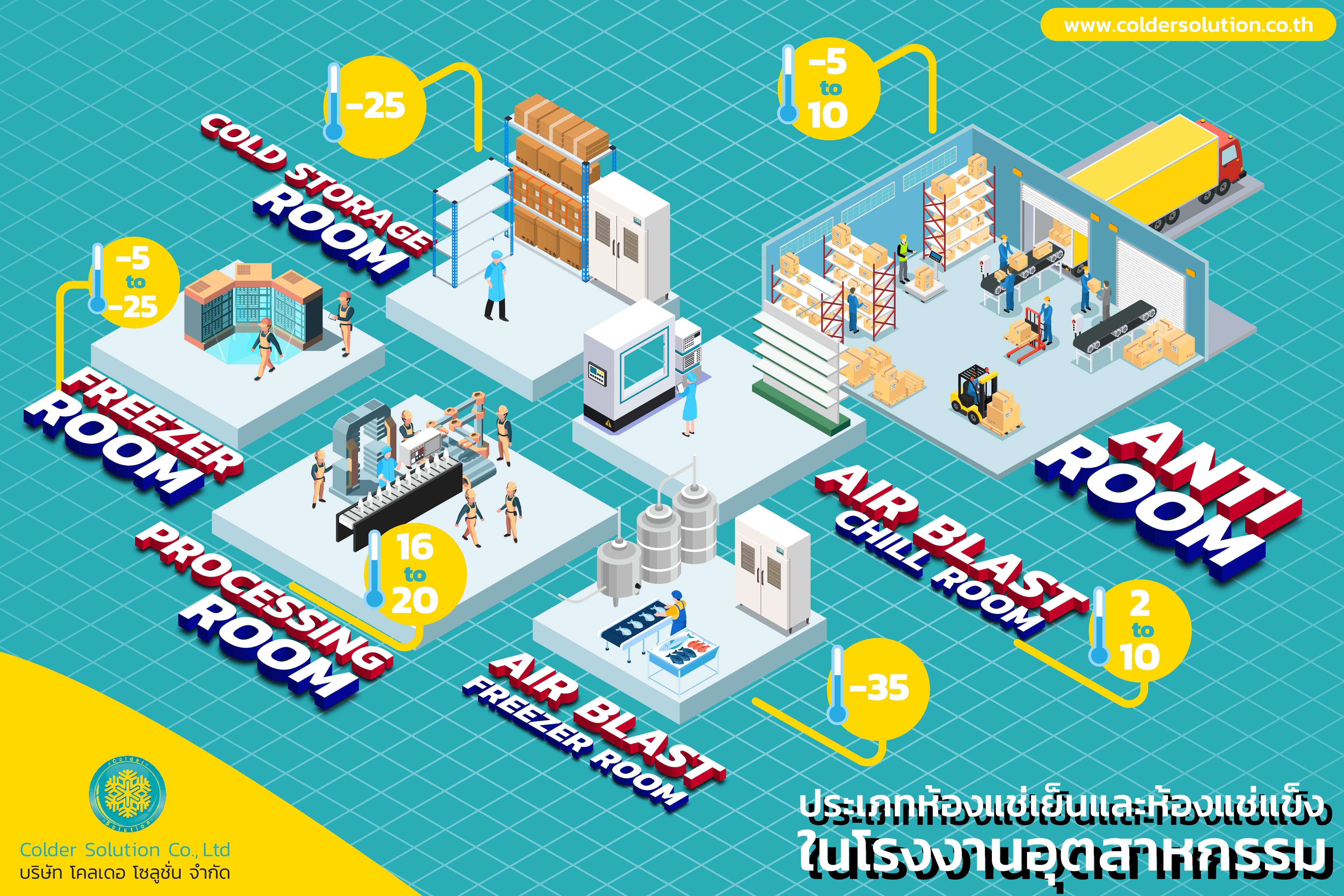
Types of Cold Rooms and Freezer Rooms
1. Air Blast Chill Room
An Air Blast Chill Room is used to rapidly reduce product temperature before the next production stage.
It can help control bacterial growth and is also used in processes such as meat conditioning.
Typical temperature: approximately 2°C to 10°C, depending on the product.
2. Freezer Room
A Freezer Room is designed to reduce product temperature below its freezing point and maintain products for longer-term storage.
Typical temperature: approximately -5°C to -25°C, depending on the product.
Freezer rooms are widely used for:
- Meat
- Seafood
- Frozen food
- Processed food
- Other temperature-sensitive products
3. Cold Storage Room
A Cold Storage Room is generally used to store products that have already been frozen.
Products entering the room should normally already be at or below the required storage temperature.
Typical temperature: approximately -18°C to -25°C
This type of cold room is widely used in:
- Frozen seafood
- Meat processing
- Livestock products
- Frozen food storage
Refrigerants historically used in these systems include:
The appropriate refrigerant depends on the refrigeration system, equipment design and applicable regulations.
4. Air Blast Freezer Room
An Air Blast Freezer Room is designed to freeze products rapidly.
Rapid freezing helps reduce the formation of large ice crystals and can help protect the texture and quality of the product.
Depending on the product, system and loading conditions, the freezing process may take several hours.
Typical temperature: approximately -35°C to -50°C
Refrigerants used in low-temperature applications may include:
Modern systems may also use other lower-GWP refrigerants depending on equipment design.
5. Ante Room
An Ante Room acts as a transition area between ambient conditions and a low-temperature cold room.
It helps reduce the amount of warm, humid outdoor air entering areas such as a blast freezer or frozen storage room.
It can also be used for:
- Temporary product holding
- Product staging
- Distribution preparation
- Loading and unloading
Typical temperature: approximately -5°C to 10°C, depending on the application.
6. Processing Room
A Processing Room is a temperature-controlled area designed for production activities where employees work for extended periods.
Typical temperature: approximately 16°C to 20°C
In some applications, the room may also require control of:
- Carbon dioxide levels
- Fresh air
- Ventilation
- Positive room pressure
- Hygiene conditions
Depending on the system, refrigerants used may include refrigerants historically associated with comfort cooling and medium-temperature applications, such as:
Cold Room Temperature Overview
| Cold Room Type | Typical Temperature |
|---|---|
| Air Blast Chill Room | 2°C to 10°C |
| Freezer Room | -5°C to -25°C |
| Cold Storage Room | -18°C to -25°C |
| Air Blast Freezer Room | -35°C to -50°C |
| Ante Room | -5°C to 10°C |
| Processing Room | 16°C to 20°C |
Actual operating temperatures should always be selected according to the product, production process, storage period and food-safety requirements.
Other Industrial Cold Room Applications
In addition to food processing and frozen storage, cold rooms are also used in many other industries.
Examples include:
- Seed storage rooms that require controlled temperature
- Fumigation rooms
- Export product storage
- Pharmaceutical storage
- Temperature-sensitive raw material storage
The correct cold room design should therefore consider both the required temperature and the characteristics of the product being stored.
Choosing the Right Refrigerant for a Cold Room
Selecting a refrigerant for an industrial cold room depends on several factors, including:
- Required temperature
- Cooling capacity
- Compressor type
- System pressure
- Energy efficiency
- Safety classification
- Refrigerant availability
- Environmental regulations
- GWP
- Equipment compatibility
Older refrigerants such as R-22, R-404A and R-507 are still found in many existing systems, while new refrigeration systems are increasingly moving toward lower-GWP alternatives and natural refrigerants.
The most suitable refrigerant should therefore be selected according to the specific system and application, rather than temperature alone.
Colder Solution
If you need advice on refrigeration systems or help selecting the right refrigerant for your cold room application, contact Colder Solution.
Line ID: @Colder
Specialist and distributor of refrigerants and refrigeration equipment.