
Types of Compressor Oil for Refrigeration and Air-Conditioning Systems
Compressor oil is an important part of refrigeration and air-conditioning systems, helping improve compressor performance and reliability.
Also known as refrigeration oil or air-conditioning compressor oil, it lubricates the moving parts inside the compressor and helps the compressor operate properly.
Learn more about compressor types and how they work
Compressor oil also helps with sealing, compression efficiency and heat removal, making it an essential component of the refrigeration system.
The type of compressor oil must be selected according to the refrigerant used in the system because oil and refrigerant circulate together throughout the refrigeration circuit.
How Many Types of Compressor Oil Are There?
Compressor oils commonly available in the market can be divided into 5 main types.
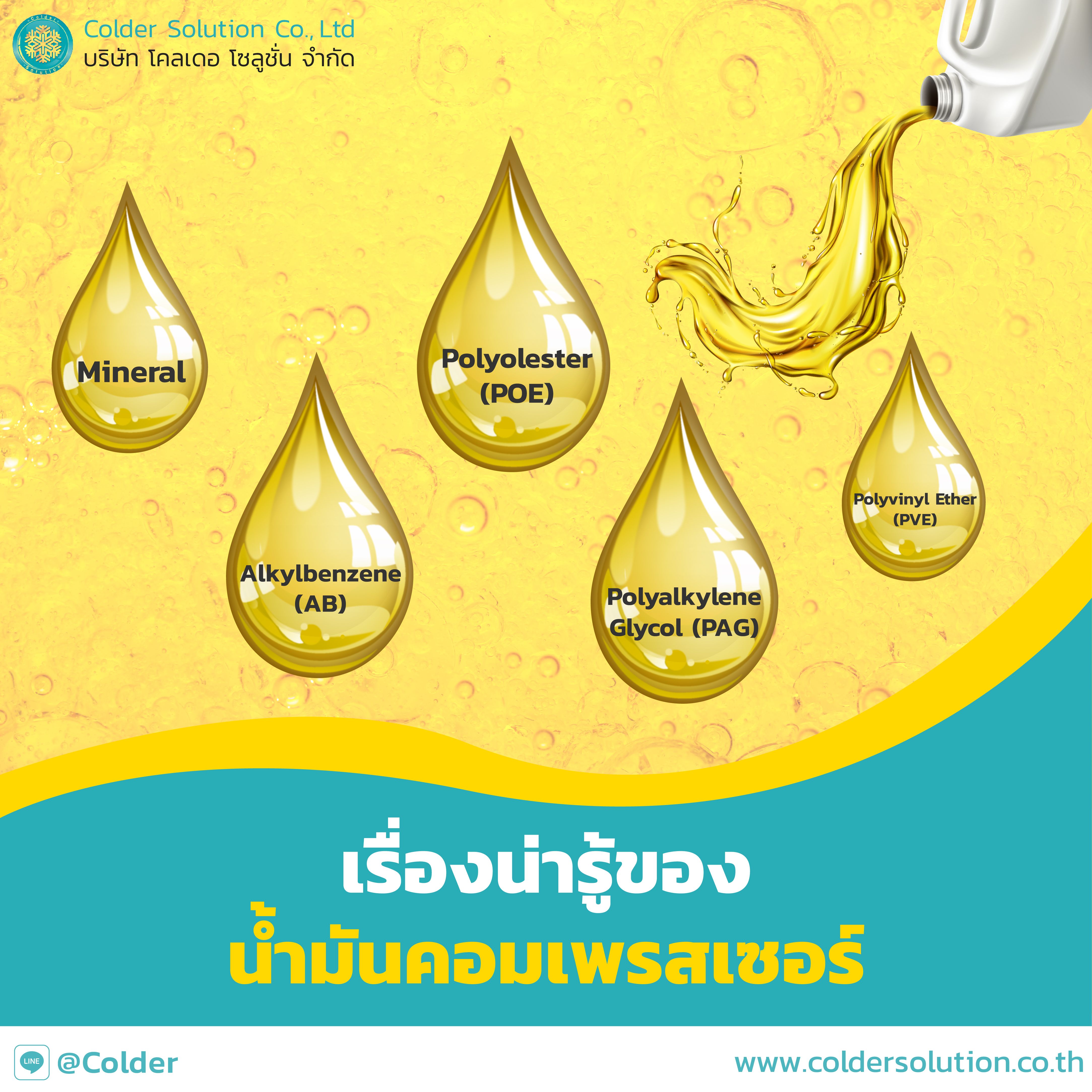
1. Mineral Oil
Mineral oil is commonly used in refrigeration systems with HCFC and HC refrigerants.
It is produced through hydrorefining of naphthenic crude oil.
Mineral oil is also widely used in ammonia refrigeration systems because of its thermal and chemical stability and good anti-foaming characteristics.
Typical refrigerants include:
- R-22
- R-12
2. Alkylbenzene Oil (AB)
Alkylbenzene, or AB oil, is a synthetic refrigeration lubricant that can be used with or as an alternative to mineral oil.
It is commonly used with CFC and HCFC refrigerants and has good compatibility with refrigerants such as R-22, particularly at low temperatures.
3. Polyolester Oil (POE)
POE oil has very good chemical stability and is widely used with HFC refrigerants.
It may also be used in selected CFC, HCFC and CO2 refrigeration systems depending on equipment requirements.
Common refrigerants include:
- R-134a
- R-404A
- R-407C
- R-410A
4. Polyalkylene Glycol Oil (PAG)
PAG oil is commonly used in automotive air-conditioning systems using R-134a.
It is highly hygroscopic and can absorb more moisture than POE or PVE oils.
5. Polyvinyl Ether Oil (PVE)
PVE oil is a synthetic lubricant that can be used as an alternative to POE in suitable systems.
It absorbs more moisture than some lubricant types, but generally less than PAG.
PVE is also known for its resistance to hydrolysis.
Important Properties of Compressor Oil
1. Viscosity
Viscosity indicates the resistance of the oil to flow.
The viscosity of compressor oil changes with temperature.
In general, oil becomes more viscous as temperature decreases.
2. Floc Test
The Floc Test is used to evaluate the tendency of mineral oil to form wax or deposits at low temperatures.
These deposits may affect oil circulation and reduce compressor performance.
3. Flash Point
The Flash Point is the minimum temperature at which oil vapor can form an ignitable mixture with air when exposed to an ignition source.
This property is important when evaluating lubricant safety characteristics.
Is It Necessary to Add or Change Compressor Oil?
In a normal refrigeration system, refrigerant and compressor oil circulate inside a closed system.
Can refrigerant really run low?
Under normal conditions, the oil should remain within the system.
However, if there is a refrigerant leak, some compressor oil may also be lost from the system.
In this case, the amount of lost oil should be checked and replenished according to the compressor manufacturer's recommendations before the system is returned to operation.
Compressor oil may also need to be replaced if:
- The oil is contaminated
- The compressor is old or used
- The refrigeration system has been opened for repair
- The refrigerant or lubricant type is being changed
Because compressor lubrication is critical to system reliability, the correct oil type and viscosity should always be selected according to the refrigerant, compressor and equipment manufacturer's specifications.
Need Help Choosing Compressor Oil?
If you need advice on refrigeration systems, refrigerants or compressor lubricants, contact Colder Solution.
Line ID: @Colder
Specialist and distributor of refrigerants, compressor oils and other refrigeration equipment.